
Adobe PageMaker History: Versions, Aldus & InDesign
The story of Aldus PageMaker, Adobe's acquisition, the desktop publishing revolution, and why InDesign replaced PageMaker.
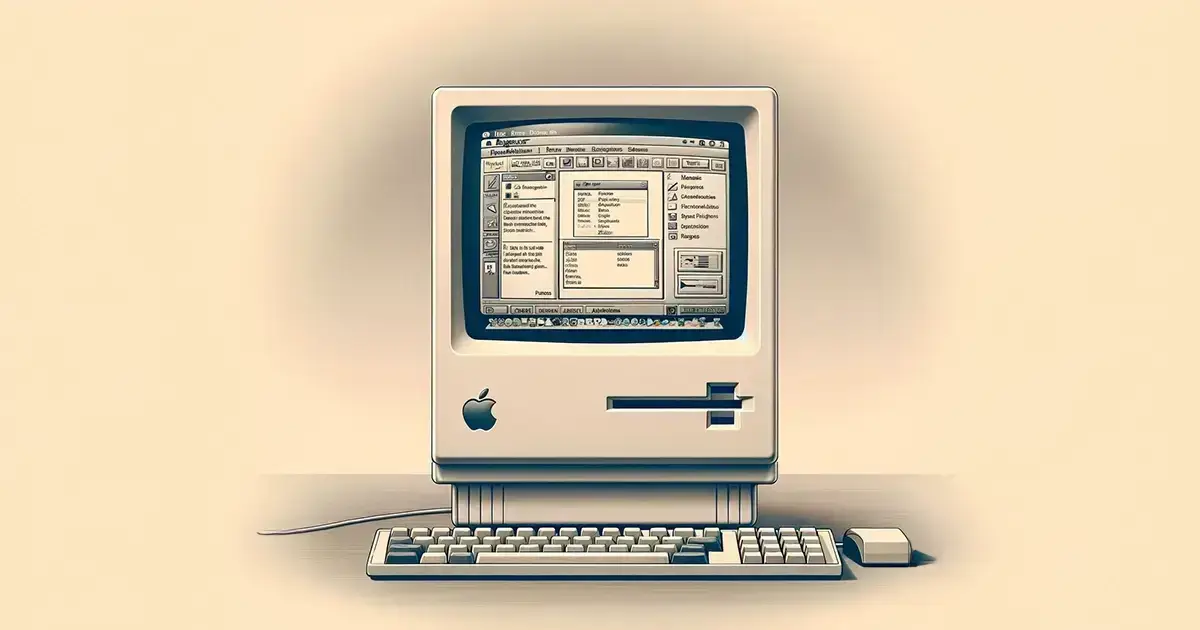
Adobe PageMaker began as Aldus PageMaker in 1985, became one of the products that defined desktop publishing, was acquired by Adobe in 1994, and was eventually replaced by Adobe InDesign after PageMaker 7.0.
The Founding of Aldus Corporation
PageMaker did not emerge from a large corporation with deep pockets. It was the product of a small Seattle startup called Aldus Corporation, founded in 1984 by Paul Brainerd along with four colleagues. Brainerd had come from a newspaper publishing background — he had worked at the Minneapolis Star and Tribune — and he understood intuitively that the technology arriving with the Apple Macintosh and the LaserWriter printer represented something genuinely transformative for people who produced documents professionally.
The name Aldus was a tribute to Aldus Manutius, the fifteenth-century Venetian printer who had invented italic type and the pocket-sized book. The choice said something about Brainerd's sense of the company's mission: it was positioning itself not just as a software vendor, but as part of a historical continuum in publishing technology. It was Brainerd who coined the term "desktop publishing" as a way of describing what his software made possible — the phrase stuck, and it defined an entire industry category.
Aldus developed PageMaker in close collaboration with Apple and Adobe. Apple provided early Macintosh hardware; Adobe's PostScript language, which drove the LaserWriter, was what made it possible to produce camera-ready output from a desktop computer. The three companies needed each other: Apple needed compelling software to sell the Mac, Adobe needed an application that demonstrated PostScript's capabilities, and Aldus needed the hardware and the output technology to make PageMaker work. The result was one of the most successful product combinations in the history of personal computing.
PageMaker 1.0 and the Desktop Publishing Revolution
PageMaker 1.0 launched in July 1985, initially for the Macintosh only. The price was $495 — significant money at the time, but a fraction of the cost of the typesetting equipment it was replacing. The application allowed users to set text in columns, place images, adjust type size and leading, and see the result on screen in a way that corresponded to what would print. This WYSIWYG (what you see is what you get) approach was not entirely new, but PageMaker and the LaserWriter together were the first combination that made it practical at a price individuals and small organisations could actually afford.
The impact was immediate and dramatic. Newsletters, church bulletins, company reports, community newspapers — all of these had previously required either expensive professional typesetting or the limitations of a typewriter. PageMaker opened professional-looking print production to anyone with a Mac and a LaserWriter. Design studios adopted it quickly, and so did in-house communications departments at companies that could not justify the cost of sending everything to an external typesetter. Within a year or two, the phrase "desktop publishing" was in common use, and Aldus had established itself as a significant company on the back of a single product.
The Windows version arrived with PageMaker 2.0 in 1987, broadening the market considerably. By this point QuarkXPress had also appeared — Quark launched version 1.0 for the Mac in 1987 — and the two products would compete fiercely for the next decade and a half.
PageMaker Version History
| Version | Features and Improvements |
|---|---|
| PageMaker 1.0 (1985) | Launched by Aldus Corporation for the Macintosh, introducing the concept of desktop publishing. |
| PageMaker 2.0 (1987) | Introduced for IBM PCs, expanding the desktop publishing revolution to the Windows platform. |
| PageMaker 3.0 (1988) | Enhanced text and graphics handling, including support for PostScript printers, which solidified its use in professional settings. |
| PageMaker 4.0 (1990) | Improved layout and design features, making it easier for users to produce sophisticated documents. |
| PageMaker 5.0 (1993) | Added features like story editor, booklet printing, and improved typography controls, catering to higher-end publishing needs. PDF support first added in the European version. |
| PageMaker 6.0 (1995) | Introduced new templates, tools for color separation, and support for plug-ins, enhancing its versatility in desktop publishing. PDF Export, Change Case, and Save for Service Provider plug-ins developed by Mapsoft. |
| PageMaker 6.5 (1996) | Improved support for PDF and HTML formats, enabling users to prepare documents for the web and digital distribution. |
| PageMaker 7.0 (2001) | Last major release, added integrated Adobe PDF export features, and improved support for importing/exporting files from other Adobe apps. |
The evolution of Aldus PageMaker mirrors the early era of desktop publishing, when the primary goal was to empower individuals to create and share documents on their computers. Its purchase by Adobe and eventual replacement with InDesign symbolized the conclusion of one era and the start of a new phase in digital design and publishing. PageMaker established the foundation for the advanced features and functionality that InDesign would later bring to the publishing industry.
The Aldus–Adobe Merger
By the early 1990s, Aldus was a healthy business — it had diversified beyond PageMaker into other software, including a presentation application called Persuasion — but it was operating in a market where Adobe was becoming increasingly powerful. Adobe controlled PostScript, which was the output language underlying virtually all professional print production, and it had launched its own publishing-adjacent products including Illustrator and Photoshop. The two companies had been intertwined since the beginning; a formal merger made strategic sense for both sides.
Adobe acquired Aldus in 1994 for roughly $525 million in stock. The merger brought PageMaker into Adobe's portfolio alongside Acrobat, which had launched the previous year. The integration between PageMaker 6 and Acrobat was one of the first fruits of the merger — PageMaker 6 introduced direct PDF export, allowing designers to produce PDF files without leaving the application. For 1995, this was ahead of its time. PDF was still a curiosity to most of the industry, but the integration planted an idea: that the workflow from layout to distribution could be a single, connected process.
Aldus's other products had a more mixed fate. Persuasion was eventually discontinued, unable to compete with Microsoft PowerPoint. The Aldus FreeHand illustration application — which Aldus had acquired from Altsys — was transferred to Macromedia as a condition of the merger, since Adobe's own Illustrator was a direct competitor. FreeHand would later become part of Adobe's portfolio again when Adobe acquired Macromedia in 2005, only to be discontinued in 2012.
Why PageMaker Lost to QuarkXPress — and Then to InDesign
PageMaker's decline was gradual but inexorable. QuarkXPress had overtaken it in the high-end professional market by the early 1990s, mainly because Quark had invested heavily in features that professional typesetters and designers needed: tighter control over kerning and tracking, better colour management, and a more capable approach to complex multi-column layouts. Quark also had a robust extension model — XTensions — that allowed third parties to add functionality. PageMaker, by comparison, felt more consumer-oriented. It was excellent for newsletters and reports but struggled with the demands of magazine production and book publishing at scale.
Adobe's response was not to patch PageMaker indefinitely but to start from scratch. The K2 project — which became InDesign — was built as a modern, plug-in-based layout engine designed to beat Quark at its own game rather than to extend PageMaker's architecture. When InDesign 1.0 shipped in 1999, PageMaker was still being maintained, but Adobe's intention was clear. PageMaker 7.0, released in 2001, was the last major version, and Adobe explicitly positioned InDesign as the replacement.
The transition was not instantaneous. Many organisations had significant investment in PageMaker templates and workflows, and InDesign 1.0 was not yet the mature product it would become. Adobe continued to sell PageMaker through the early 2000s and provided migration tools, including a PageMaker plug-in package for InDesign that allowed users to open PageMaker files directly. By around 2004–2005, the migration was largely complete for professional users, and Adobe quietly ended PageMaker sales.
Mapsoft and PageMaker
Mapsoft's own history is closely tied to PageMaker. Our Technical Director, Michael Peters, worked directly on PageMaker as part of the Adobe development effort. Mapsoft developed three plugins that shipped with the product:
- Create PDF Export — enabling direct PDF export from PageMaker, one of the earliest implementations of integrated PDF creation in a desktop publishing application
- Change Case — a text utility plugin for converting selected text between uppercase, lowercase, title case, and sentence case
- Save for Service Provider — a prepress plugin that packaged a PageMaker document with all its linked files and fonts, ready for handoff to a commercial printer or service bureau
This early involvement with PageMaker and Adobe at the birth of desktop publishing laid the foundation for Mapsoft's deep expertise in Adobe platform development — an expertise that continues today across Acrobat, Illustrator, InDesign, and Photoshop.
PageMaker's Legacy
It would be easy to dismiss PageMaker as a transitional technology that served its purpose and was superseded. That reading undersells what it actually achieved. PageMaker fundamentally changed who could participate in the production of printed materials. Before 1985, producing a typeset document required either access to professional typesetting equipment or acceptance of the limitations of a typewriter. PageMaker changed that, and the change was permanent. The desktop publishing industry that grew up around PageMaker — the design studios, the service bureaux, the commercial printers who learned to accept PostScript files — became the infrastructure on which modern digital publishing was built.
The PDF format that eventually became central to digital document distribution emerged partly from the same ecosystem that PageMaker helped create. Adobe Acrobat and the PDF workflow that dominates professional publishing today are direct descendants of the ideas about electronic document distribution that Brainerd and his colleagues at Aldus were thinking about in the late 1980s. PageMaker may be gone, but the industry it helped build continues to generate significant work — including, in our case, a range of Acrobat plug-ins and PDF tools that sit squarely in that tradition.
Associated Links
Related Articles
The Importance of Barcodes in Modern Society
Explore the different types of barcodes, their applications across industries, the algorithms behind them, and how they are rendered using fonts, raster, and vector graphics.
Image Formats for PDF: JPEG, PNG, TIFF, and More
Comparing image file formats used in PDF documents — JPEG, PNG, TIFF, JBIG2, CCITT, and JPEG 2000 — their compression methods, quality trade-offs, and best use cases.
Understanding Colour Models: RGB and CMYK
A practical guide to RGB and CMYK colour models — how they work, their differences, and why colour management matters when converting between screen and print.
Need Adobe Software Solutions?
Mapsoft has over 30 years of experience building Adobe plugins and custom solutions. Get in touch to discuss your project.