
Inspiring Innovation: How Adobe Transformed Creativity
Explore the history of Adobe Inc. and how their work at Xerox PARC changed the multimedia software industry.
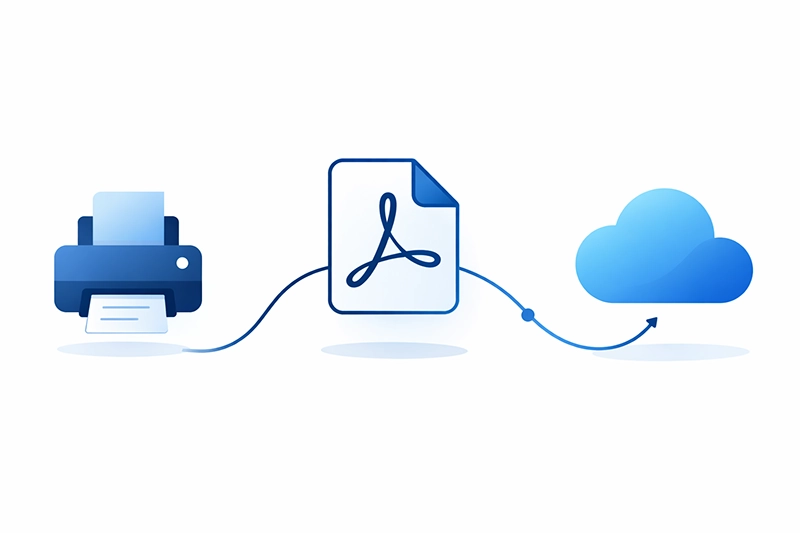
Origins at Xerox PARC
The story of Adobe begins at Xerox PARC (Palo Alto Research Center), where founders John Warnock and Charles Geschke were developing groundbreaking technologies in the late 1970s. Working on the InterPress page description language, they envisioned a universal way to describe printed pages electronically — a concept that would ultimately reshape how the world creates and shares documents.
When Xerox proved slow to commercialise their innovations, Warnock and Geschke left to found Adobe Systems Incorporated in December 1982. They named the company after Adobe Creek, which ran behind Warnock's home in Los Altos, California.
PostScript: The Foundation
Adobe's first product was PostScript, a page description language that could precisely describe the appearance of text, graphics, and images on a printed page. PostScript was revolutionary because it was device-independent — the same file could produce identical output on any PostScript-compatible printer, regardless of resolution or manufacturer.
In 1985, Apple chose PostScript as the language for its LaserWriter printer, and Aldus released PageMaker for the Macintosh. Together with the Apple Macintosh, these three products created the desktop publishing revolution, fundamentally changing the printing and publishing industries. For the first time, anyone with a personal computer could produce professional-quality printed documents.
The Desktop Publishing Revolution
Desktop publishing democratised print production. Before PostScript and the LaserWriter, professional typesetting and layout required expensive dedicated equipment and specialist operators. Adobe's technology brought these capabilities to the desktop, enabling businesses, designers, and individuals to create everything from business cards to full-colour magazines.
Adobe capitalised on this revolution by developing its own software tools. Adobe Illustrator launched in 1987 as a professional vector drawing tool that used PostScript as its native format. Adobe Photoshop followed in 1990, quickly becoming the standard for digital image editing. For a full guide to the Adobe product range, see our Adobe products guide.
The Birth of PDF
In 1993, Adobe introduced the Portable Document Format (PDF) and the first version of Acrobat. The concept grew from John Warnock's "Camelot" memo, which described a vision for capturing documents from any application on any computer and viewing them faithfully on any platform. PDF extended PostScript's device-independent philosophy to electronic document distribution.
Though initially slow to gain adoption, PDF eventually became the world's most widely used document format, adopted as the ISO 32000 international standard. Today, PDF is essential to business, government, legal, and publishing workflows worldwide. For the full version history, see our article on the history of Adobe Acrobat.
Building the Creative Suite
Through the 1990s and 2000s, Adobe expanded its product portfolio through both internal development and strategic acquisitions:
- 1994: Adobe acquired Aldus Corporation, gaining PageMaker and After Effects
- 1999: InDesign launched as a modern replacement for PageMaker, eventually displacing QuarkXPress as the industry standard for page layout
- 2003: Adobe Creative Suite (CS) bundled Photoshop, Illustrator, InDesign, and other tools into an integrated product suite
- 2005: Adobe acquired Macromedia, adding Flash, Dreamweaver, and other web tools to its portfolio
The Move to Creative Cloud
In 2013, Adobe made the bold decision to transition from perpetual software licences to a subscription-based model with Adobe Creative Cloud. This shift was controversial at the time but ultimately allowed Adobe to deliver continuous updates, cloud services, and new applications to subscribers. Creative Cloud now serves over 30 million paying subscribers worldwide.
The cloud model enabled Adobe to invest heavily in emerging technologies, including artificial intelligence through Adobe Sensei, real-time collaboration features, and new applications like Adobe XD for UX design and Adobe Fresco for digital painting.
Adobe Today
Adobe has grown from a two-person startup into one of the world's largest software companies, with three major business segments:
- Creative Cloud: Professional creative tools for design, photography, video, and web development
- Document Cloud: PDF and electronic signature solutions centred on Acrobat and Adobe Sign
- Experience Cloud: Enterprise marketing, analytics, and commerce solutions
The company continues to innovate with AI-powered features like Adobe Firefly for generative AI content creation, while maintaining its commitment to the professional creative tools that have defined the industry for over four decades.
Adobe's Impact on Mapsoft
Mapsoft has been developing software for Adobe products since the early days of Acrobat. Our deep expertise in Adobe's extensibility platforms — from the Acrobat SDK and ExtendScript to modern UXP — allows us to build powerful commercial plugins and custom solutions that extend Adobe applications in ways their users need.
Related Articles
Adobe Inc: Company Overview and Recent Developments
An overview of Adobe Inc — its founding, key milestones, major acquisitions, and recent developments including generative AI, Creative Cloud, and Document Cloud.
Adobe Products: A Comprehensive Guide
Discover the functionality of Adobe products. Explore the benefits and availability of these tools on Windows and Mac.
Options for User Interfaces in Adobe
Discover the various ways to create user interfaces for Adobe products. Exploring development of extensions and plugins for Adobe Creative Cloud and Document Cloud.
Explore Our Adobe Solutions
Building on decades of Adobe development experience, Mapsoft delivers professional plugins and custom solutions.