
AI-Assisted Development at Mapsoft
How we integrate modern AI tools into our development workflow — and why human expertise remains at the centre of everything we build.
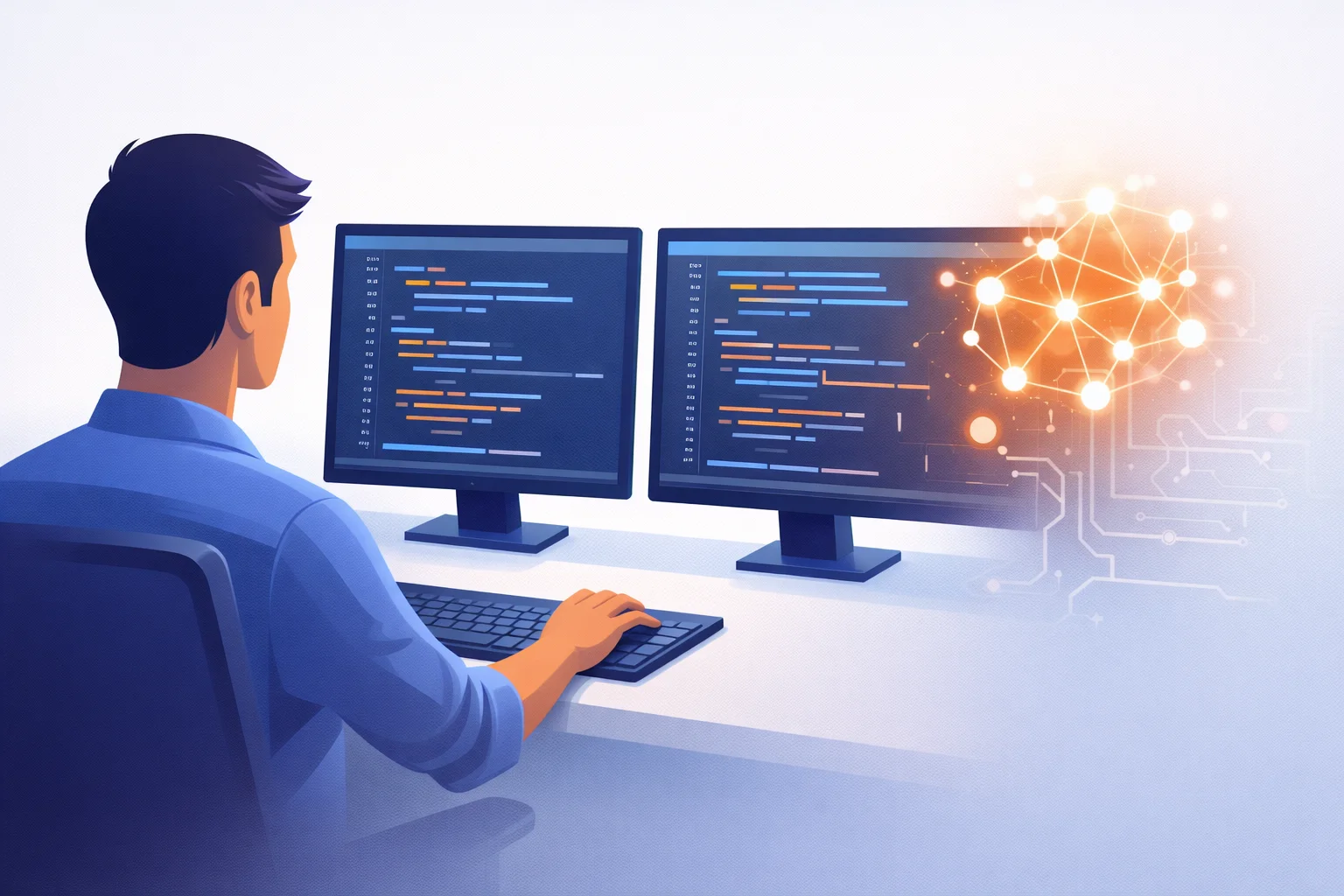
Embracing AI as a Development Tool
Over the past three years, we have watched the AI landscape evolve at an extraordinary pace. Large language models have progressed from experimental curiosities to genuinely useful development tools, and the rate of improvement shows no sign of slowing. At Mapsoft, we believe in adopting the best tools available to deliver high-quality software — and AI-assisted development has earned its place in our toolkit.
We now use products such as Claude Code, Codex, GitHub Copilot integrated into both Microsoft Visual Studio and Visual Studio Code, and custom GPTs built for our specialised development domains. These tools help us work more efficiently across a range of tasks, from exploring unfamiliar APIs and generating boilerplate code to drafting documentation and identifying potential issues in complex codebases.
“From writing code to building with AI.”
What AI-Assisted Development Means for Us
It is important to be clear about what AI-assisted development is — and what it is not. We are not “vibe coding”: we do not hand a prompt to an AI model and ship whatever comes back. Every piece of work still moves through our established development process, under the watchful eyes of our development team.
In practice, AI tools serve as a force multiplier for our experienced developers. They accelerate tasks that would otherwise be time-consuming but routine, freeing our team to focus on the architectural decisions, domain-specific logic, and quality standards that require human judgement and decades of accumulated expertise.
Where AI Helps
- Code generation and scaffolding: Quickly producing boilerplate, repetitive patterns, and initial implementations that our developers then refine and optimise.
- Code review assistance: AI tools can spot potential issues, suggest improvements, and help maintain consistency across large codebases.
- Documentation: Drafting technical documentation, user guides, and API references more efficiently.
- Exploration and research: Rapidly investigating SDKs, APIs, and specifications — particularly valuable when working across the breadth of Adobe platforms we support.
- Testing: Generating test cases and identifying edge cases that might otherwise be overlooked.
Where Humans Lead
- Architecture and design: Structural decisions about how software is built require understanding of business requirements, performance constraints, and long-term maintainability that AI cannot reliably provide.
- Domain expertise: Our 30+ years of experience with Adobe technologies, the PDF specification, and the Acrobat SDK inform decisions that no general-purpose AI model can replicate.
- Quality assurance: All code is reviewed, tested, and validated by our development team before it reaches our customers. AI output is treated as a first draft, never as a finished product.
- Security and compliance: Sensitive areas such as PDF security, digital signatures, and data handling require careful human oversight.
- Client relationships: Understanding client needs, providing consultancy, and making judgement calls about project direction are fundamentally human activities.
Custom GPTs for Specialised Work
Beyond general-purpose AI coding tools, we have developed custom GPTs tailored to our specific development domains. These specialised models are trained on our internal knowledge of Adobe plugin development, PDF standards, and document workflow automation. They provide more relevant and accurate assistance than generic models when working in our areas of deep expertise.
This approach reflects our broader philosophy: we do not simply adopt technology for its own sake. We evaluate, customise, and integrate tools in ways that genuinely improve the quality and efficiency of our work.
The Pace of Change
The AI development landscape is moving remarkably quickly. Models that seemed state-of-the-art six months ago are regularly surpassed by new releases with substantially improved capabilities. We actively monitor these developments and continuously evaluate new tools and techniques to ensure we are using the best available technology.
However, we approach this rapid evolution with pragmatism rather than hype. Not every new model or tool is an improvement for our specific use cases. We test rigorously, measure the impact on our output quality, and adopt only what demonstrably makes our work better.
Our Commitment to Quality
AI-assisted development does not change our fundamental commitment to quality. Every product we ship, every custom solution we deliver, and every piece of advice we offer through our consultancy services is backed by the same rigorous standards we have maintained for over 30 years.
What has changed is the speed and efficiency with which we can deliver. AI tools help us move faster without cutting corners — because the corners are still being watched by experienced developers who understand the technology, the standards, and the needs of our customers.
If you have questions about our development approach or how we can help with your project, get in touch.
Related Articles
Our Development Methodology
Mapsoft’s five-step development process — from requirements assessment through to delivery and ongoing support.
Acrobat SDK Overview
A comprehensive look at the Adobe Acrobat SDK — its architecture, APIs, and how we use it to build professional plugins.
Custom Software Development
Bespoke software solutions tailored to your document workflow requirements, built on decades of Adobe expertise.
Ready to Start Your Project?
Whether you need a custom plugin, workflow automation, or expert consultancy, our team combines deep expertise with modern tools to deliver outstanding results.