
{
“@type”: “Article”,
“image”: {
“url”: “https://csuxjmfbwmkxiegfpljm.supabase.co/storage/v1/object/public/blog-images/organization-3822/1765326966465_image_1765326966376.png”,
“@type”: “ImageObject”,
“description”: “Lawyer reviewing contracts in sunlit office”
},
“author”: {
“url”: “https://mapsoft.com”,
“name”: “Mapsoft”,
“@type”: “Organization”
},
“@context”: “https://schema.org”,
“headline”: “Contract Version Control: Streamlining Digital Workflows”,
“publisher”: {
“url”: “https://mapsoft.com”,
“name”: “Mapsoft”,
“@type”: “Organization”
},
“inLanguage”: “en”,
“articleBody”: “Contract version control streamlines digital workflows, minimizes risks, and ensures legal compliance. Explore PDF tools, automation, and best practices.”,
“description”: “Contract version control streamlines digital workflows, minimizes risks, and ensures legal compliance. Explore PDF tools, automation, and best practices.”,
“datePublished”: “2025-12-10T00:36:38.906Z”
}
Over seventy percent of American businesses admit that losing track of contract changes has cost them money or legal certainty. For any American company managing critical documents, simple mistakes from poor version control pose real financial and compliance risks. Understanding contract version control means knowing exactly who changed what and when, offering secure clarity in a world where a single outdated PDF can spark costly disputes. This guide shows how precision tools keep your contracts risk-proof and your team in sync.
Table of Contents
- Defining Contract Version Control and Its Purpose
- Version Tracking Methods In Digital Contracts
- Key Features For Pdf-Based Contract Management
- Legal Compliance And Audit Trail Requirements
- Risks Of Poor Version Control Systems
- Best Practices For Automated Workflow Integration
Key Takeaways
| Point | Details |
|---|---|
| Importance of Version Control | Contract version control is essential for maintaining a transparent and accountable document management process throughout a contract’s lifecycle. |
| Digital Tracking Methods | Implementing advanced digital version tracking methods ensures comprehensive documentation of changes, thereby enhancing legal compliance and risk management. |
| Audit Trail Necessity | Meticulous audit trail documentation is crucial for legal compliance, providing an immutable record of contract modifications and stakeholder accountability. |
| Risks of Poor Management | Inadequate version control systems can lead to significant operational and legal vulnerabilities, necessitating a proactive approach to mitigate these risks. |
Defining Contract Version Control and Its Purpose
Contract version control represents a systematic approach to tracking, managing, and preserving the complete history of document modifications throughout a contract’s lifecycle. At its core, this practice ensures that every change, comment, and revision is meticulously documented and retrievable. Tracking contract evolution enables organizations to maintain transparency, accountability, and legal compliance in their document management processes.
The primary purpose of contract version control extends beyond simple record keeping. Version tracking provides a comprehensive audit trail that captures the precise progression of a contract from initial draft to final execution. This means that legal teams can instantly identify who made specific changes, when those modifications occurred, and understand the context behind each revision. By maintaining a clear chronological record, businesses protect themselves against potential disputes and ensure that all stakeholders have access to the most current and accurate contract iteration.
Key aspects of effective contract version control include:
- Automatic logging of all document changes
- Clear identification of the current binding version
- Preservation of historical document iterations
- Detailed tracking of individual contributor edits
- Secure storage and easy retrieval of past contract versions
Contract version control ultimately transforms contract management from a static, risk-prone process into a dynamic, transparent workflow. By implementing robust version tracking mechanisms, organizations can streamline collaboration, reduce errors, and create a single source of truth for critical business agreements. This approach not only mitigates legal risks but also enhances overall organizational efficiency and communication around contractual documents.
Version Tracking Methods in Digital Contracts
In the realm of digital contract management, version tracking has evolved into a sophisticated process that goes far beyond simple document archiving. Tracking every modification requires implementing strategic methods that capture the complete lifecycle of a contract with precision and reliability. Modern digital contract management systems utilize advanced techniques to ensure comprehensive documentation of changes, creating an unambiguous record of document progression.
Digital version tracking incorporates several critical methodologies designed to maintain document integrity and transparency. These methods typically include automated version numbering, centralized document repositories, and granular permission controls. By establishing a systematic approach to documenting revisions, organizations can create a robust audit trail that captures not just the what, but the who, when, and why of each contract modification. Comprehensive change documentation becomes crucial for legal compliance, risk management, and maintaining clear communication among stakeholders.
Key digital version tracking techniques include:
- Automatic version numbering (v1.0, v1.1, v2.0)
- Timestamped change logs
- User-specific editing permissions
- Redline and comment tracking
- Secure archival of previous document iterations
The most effective version tracking strategies integrate technological solutions with clear organizational protocols. By implementing robust digital tracking mechanisms, businesses transform contract management from a potential source of confusion into a transparent, accountable process. This approach not only mitigates legal risks but also streamlines collaboration, ensuring that every team member has access to the most current and accurate contract information.
Key Features for PDF-Based Contract Management
PDF-based contract management systems have revolutionized how organizations handle complex document workflows, offering sophisticated tools that go beyond traditional document tracking. Comprehensive edit history and audit trails are now fundamental components of modern contract management strategies. These advanced systems provide robust mechanisms for tracking every nuanced change, ensuring complete transparency and accountability throughout the contract lifecycle.

Digital contract management requires a multifaceted approach that integrates advanced technological features. Maintaining a single authoritative draft with precise tracking capabilities allows organizations to minimize errors, reduce legal risks, and streamline collaborative processes. The most effective PDF-based contract management solutions offer a comprehensive suite of features designed to enhance document integrity and workflow efficiency.
Key features of advanced PDF-based contract management systems include:
- Side-by-side redline comparison
- Automatic modification tracking
- Granular user permission controls
- Real-time collaborative editing
- Secure document versioning
- Comprehensive audit logging
- Integrated approval workflows
Successful implementation of these features transforms contract management from a potential administrative burden into a strategic organizational capability. By leveraging advanced PDF management tools, businesses can create more transparent, accountable, and efficient document processes that reduce legal risks and enhance overall operational effectiveness.
Legal Compliance and Audit Trail Requirements
Legal compliance in contract management hinges on maintaining meticulous and comprehensive documentation of all contract modifications. Version control risks can significantly impact regulatory alignment when organizations fail to implement robust tracking mechanisms. Without a systematic approach to documenting contract changes, businesses expose themselves to potential legal challenges, regulatory scrutiny, and potential enforcement complications.
Audit trail documentation serves as the critical backbone of legal compliance in digital contract management. By creating a transparent and immutable record of every contract modification, organizations can demonstrate accountability and protect themselves from potential disputes. Maintaining a full record of contract changes enables businesses to provide precise documentation of who made specific modifications, when they occurred, and the context surrounding each change.
Key legal compliance requirements for audit trails include:
- Timestamped modification records
- User-specific change identification
- Comprehensive edit history preservation
- Immutable document versioning
- Granular access and permission logs
- Secure and tamper-evident document storage
- Consistent metadata tracking
Effective legal compliance strategies transform audit trail management from a potential administrative burden into a strategic organizational safeguard. By implementing rigorous version control and documentation practices, businesses can create a proactive approach to regulatory compliance, reducing legal risks and ensuring transparency throughout the contract lifecycle.
Risks of Poor Version Control Systems
Poor version control systems represent a significant operational and legal vulnerability for organizations of all sizes. Unintended legal commitments can emerge from outdated contract versions when businesses fail to implement robust tracking mechanisms. The consequences of inadequate version management extend far beyond simple administrative inefficiencies, potentially exposing companies to substantial financial and legal risks.
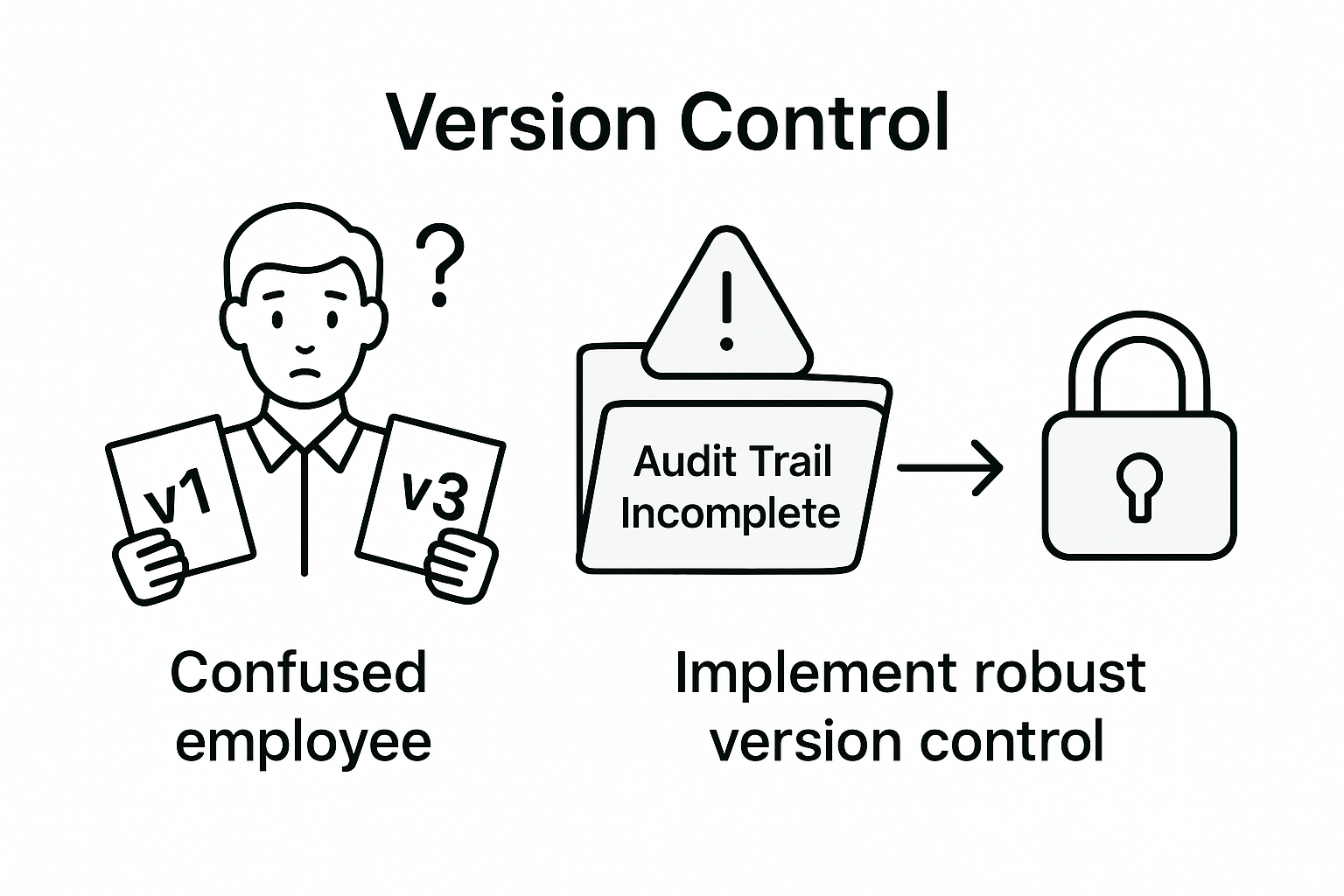
Document version tracking becomes critical in preventing potentially catastrophic organizational errors. Inadequate version control platforms can result in critical data loss that undermines an organization’s ability to maintain accurate historical records. System failures, improper configuration, and insufficient backup protocols can permanently compromise the integrity of crucial contract documentation.
Key risks associated with poor version control systems include:
- Accidental execution of outdated contract terms
- Inability to trace document modification history
- Compromised legal and regulatory compliance
- Increased vulnerability to contractual disputes
- Potential financial losses from misunderstood agreements
- Erosion of organizational credibility
- Challenges in audit and regulatory reporting
Addressing version control weaknesses requires a proactive, comprehensive approach that prioritizes document integrity, technological reliability, and systematic tracking. By recognizing and mitigating these risks, organizations can transform potential vulnerabilities into opportunities for enhanced operational transparency and legal protection.
Best Practices for Automated Workflow Integration
Successful automated workflow integration requires a strategic approach that prioritizes precision, transparency, and comprehensive tracking. Maintaining a single authoritative draft becomes fundamental to ensuring document integrity and preventing version confusion across organizational processes. By implementing systematic tracking mechanisms, businesses can create a robust framework that minimizes errors and maximizes operational efficiency.
Workflow automation transforms contract management from a manual, error-prone process into a streamlined, intelligent system. Comprehensive edit history and automatic tracking of modifications enable organizations to create transparent, accountable document management protocols. This approach not only reduces administrative overhead but also provides a clear, auditable path for every contract iteration.
Key best practices for automated workflow integration include:
- Establishing a centralized document repository
- Implementing real-time collaborative editing
- Creating granular user permission structures
- Developing automated notification systems
- Generating comprehensive change logs
- Integrating machine learning for predictive version management
- Ensuring secure, encrypted document storage
By embracing these strategic practices, organizations can transform their contract management processes from reactive administrative tasks to proactive, intelligent workflows. Automated integration reduces human error, accelerates document processing, and creates a more transparent, efficient approach to managing critical business agreements.
Enhance Your Contract Version Control with Mapsoft’s Advanced PDF Solutions
Managing contract versions and maintaining an accurate edit history are critical challenges highlighted in the article. Poor version control can create legal risks and operational inefficiencies, especially when handling complex PDF documents in digital workflows. If you aim to secure your contracts with precise tracking, automated audit trails, and streamlined collaboration, understanding how to leverage advanced PDF management is essential.
Mapsoft.com specializes in enhancing Adobe Acrobat® and PDF workflows to solve these very pain points. Our powerful tools and custom solutions make version tracking effortless by providing features such as secure document versioning, automatic modification logging, and real-time collaborative editing. With Mapsoft PDF Hub at your fingertips, you get extensive PDF editing, metadata management, and automation capabilities that transform contract version control from a manual risk into a seamless process.
Discover how Mapsoft’s software products and services can help you maintain a single authoritative version of every contract with complete transparency and legal compliance. Visit Mapsoft.com today to explore our solutions designed to optimize your document workflows and reduce legal exposure. Take control of your contract lifecycle now by integrating our specialized PDF tools and automated batch workflows.
Frequently Asked Questions
What is contract version control?
Contract version control is a systematic approach to tracking, managing, and preserving the complete history of modifications made to a contract throughout its lifecycle, ensuring every change is documented and retrievable.
Why is version control important in contract management?
Version control is crucial because it provides a comprehensive audit trail that allows organizations to track modifications, ensure legal compliance, and maintain transparency among stakeholders throughout the contract’s lifecycle.
What are the key features of effective contract version control systems?
Key features include automatic logging of document changes, clear identification of the current version, preservation of historical document iterations, detailed tracking of edits, and secure storage for easy retrieval.
How can automated workflow integration enhance contract version control?
Automated workflow integration enhances contract version control by minimizing administrative errors, ensuring document integrity, providing comprehensive change logs, and enabling real-time collaboration among team members.
Recommended
- Document Version Control for Businesses in 2025: Best Practices and Adobe Solutions –
- Digital Project Management in 2025: Adobe-Powered Strategies –
- Collaboration Across Teams with Adobe: 2025 Strategies for Success –
- Daring Agile Project Management Basics for Enterprise Teams
- How to Streamline Workflows Using DocuSign Templates
- Improving Team Collaboration: Complete Guide for 2025 – Blog