
More than 80 percent of american managers say emotional intelligence is just as vital as technical skills in the workplace. Whether you lead a team or collaborate with colleagues, understanding emotions shapes every professional interaction. Emotional intelligence helps make complex work relationships more productive, boosts team morale, and leads to better conflict resolution. By focusing on these practical skills, you position yourself for stronger leadership and lasting career growth.
Table of Contents
- Defining Emotional Intelligence at Work
- Core Components and Types of Emotional Intelligence
- Workplace Benefits and Real-World Applications
- Building and Developing Emotional Intelligence Skills
- Common Mistakes and Barriers to Success
Key Takeaways
| Point | Details |
|---|---|
| Importance of Emotional Intelligence | Emotional intelligence is essential for successful workplace dynamics, impacting communication and collaboration. |
| Five Core Components | The key components are self-awareness, self-regulation, motivation, empathy, and social skills, all critical for professional success. |
| Workplace Benefits | High emotional intelligence enhances team collaboration, improves conflict resolution, and strengthens leadership potential. |
| Development Strategies | Consistent practice, self-reflection, and targeted strategies are necessary to enhance emotional intelligence effectively. |
Defining Emotional Intelligence at Work
In the complex world of professional interactions, emotional intelligence (EI) has emerged as a critical skill set for successful workplace dynamics. According to iiste, emotional intelligence represents the ability to explore feelings, motivate oneself, and effectively manage emotions within personal and professional relationships.
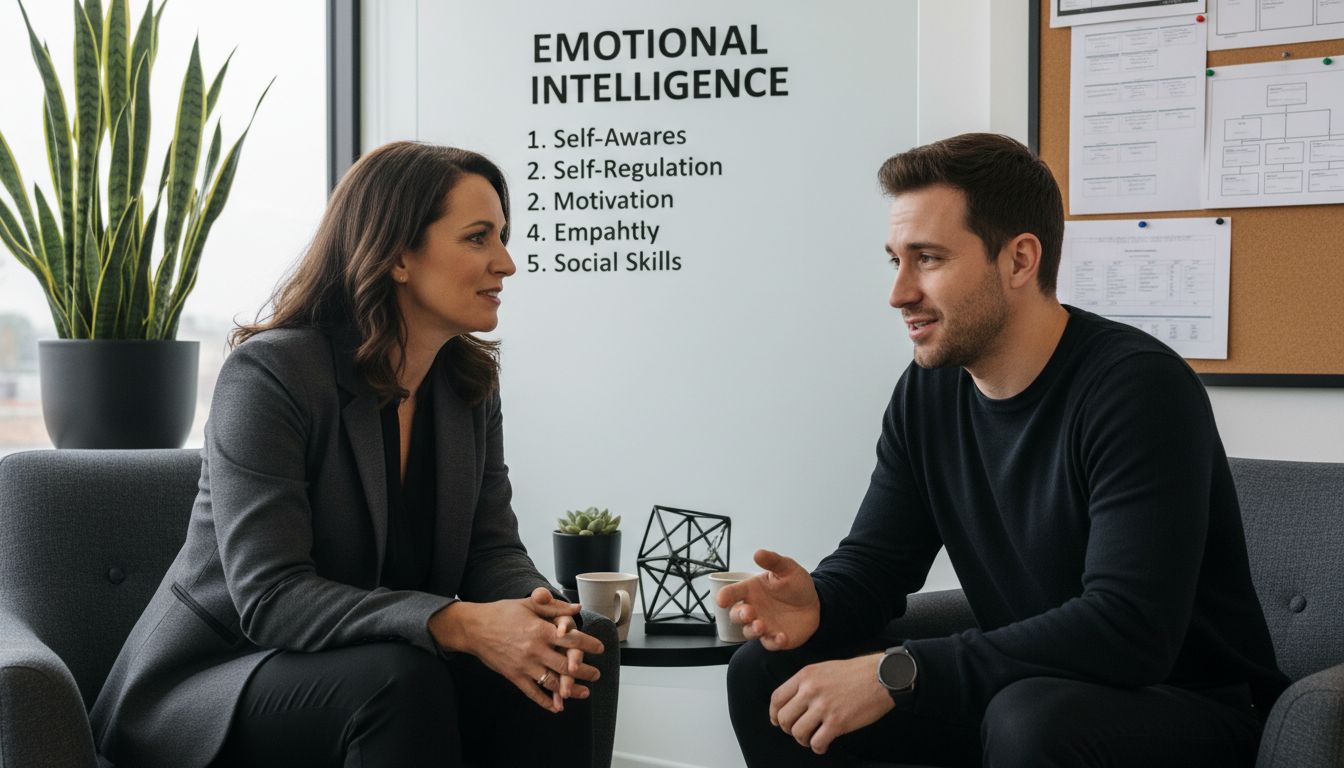
The core of emotional intelligence comprises five fundamental components that distinguish exceptional professionals. As kintess explains, these components include:
- Self-awareness: Understanding one’s emotional states and triggers
- Self-regulation: Managing personal emotional responses
- Motivation: Driving personal performance through emotional understanding
- Empathy: Recognizing and responding to others’ emotional experiences
- Social skills: Building and maintaining constructive interpersonal connections
These components are not merely abstract concepts but practical skills that directly impact workplace performance. Professionals with high emotional intelligence can navigate complex team dynamics, communicate more effectively, resolve conflicts with greater nuance, and create more positive work environments. By developing these skills, individuals transform emotional awareness from a soft skill into a strategic professional advantage, enabling more meaningful collaborations and driving organizational success.
Core Components and Types of Emotional Intelligence
Emotional intelligence is not a singular, monolithic skill but a multifaceted framework of interconnected abilities. According to kintess, the five core components of emotional intelligence form a comprehensive approach to understanding and managing human emotions in professional settings.
Breaking Down the Core Components
1. Self-Awareness
- Recognizing personal emotional patterns
- Understanding individual triggers and reactions
- Identifying emotional strengths and limitations
2. Self-Regulation
- Controlling impulsive emotional responses
- Managing stress effectively
- Maintaining professional composure under pressure
3. Motivation
- Driving personal performance through emotional understanding
- Maintaining a positive, goal-oriented mindset
- Demonstrating resilience and commitment
4. Empathy
- Perceiving and understanding others’ emotional states
- Responding sensitively to team members’ feelings
- Building strong interpersonal connections
5. Social Skills
- Navigating complex workplace relationships
- Communicating effectively across diverse teams
- Resolving conflicts with emotional intelligence
As icaionlineregistration confirms, these components collectively influence how professionals perceive, express, and respond to emotions. By developing these interconnected skills, individuals can transform emotional intelligence from a theoretical concept into a powerful professional tool that enhances workplace interactions, leadership effectiveness, and overall team dynamics.
Workplace Benefits and Real-World Applications
Emotional intelligence transforms workplace dynamics by providing professionals with powerful interpersonal tools that drive organizational success. According to research from arxiv, emotional intelligence demonstrates strong correlations with critical leadership traits, including empathy, ethical conduct, social competence, and motivational effectiveness.
Key Workplace Benefits
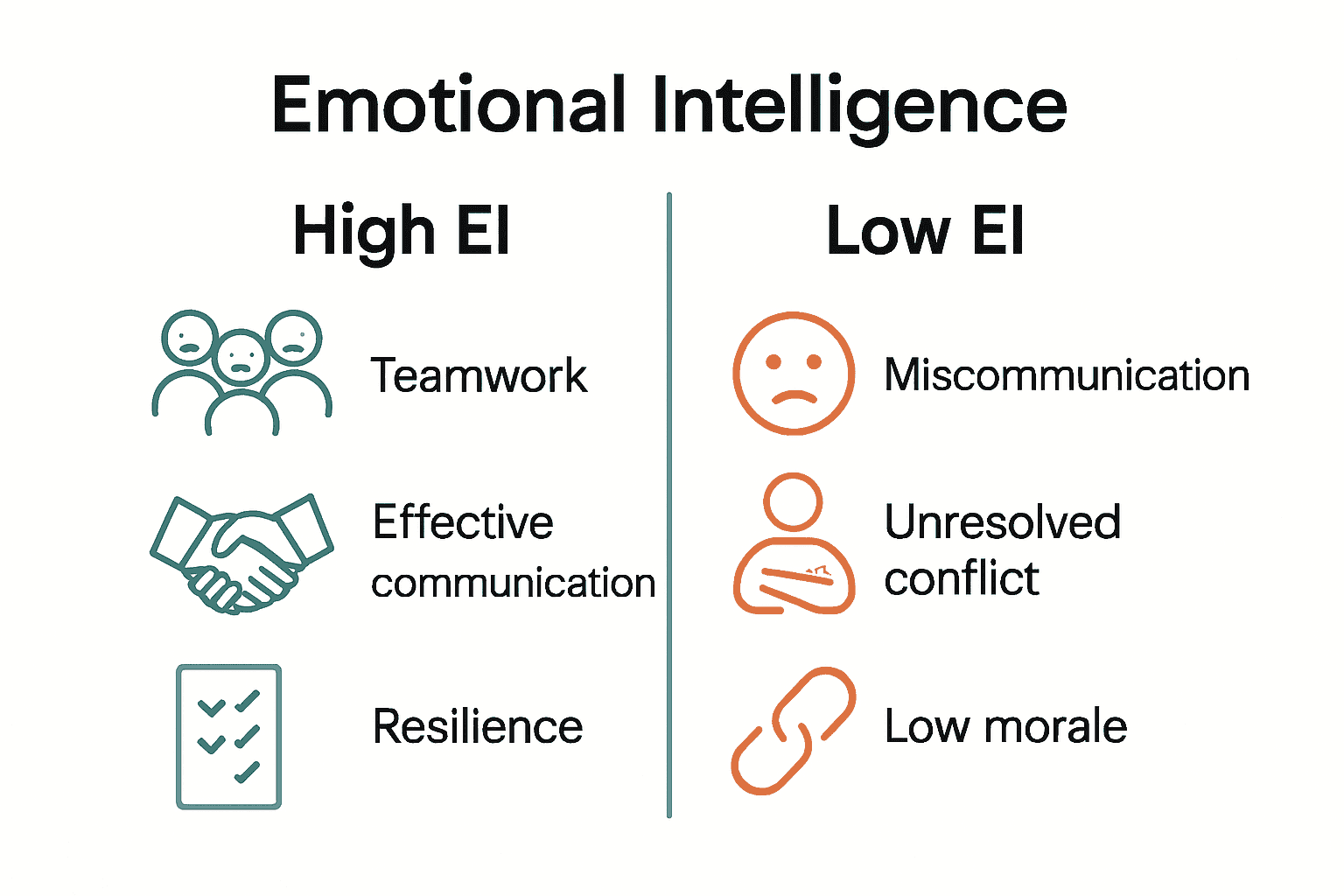
Professionals with high emotional intelligence experience numerous advantages across various professional contexts:
- Enhanced Team Collaboration: Ability to read and respond to team members’ emotional states
- Improved Conflict Resolution: More nuanced understanding of interpersonal dynamics
- Stronger Leadership Potential: Better capacity to motivate and inspire colleagues
- Increased Resilience: More effective stress management and emotional regulation
- Better Communication: More precise and empathetic interaction styles
As so07 highlights, emotional intelligence serves as a sophisticated guide to navigating complex workplace relationships. It helps professionals understand their roles, express emotions constructively, and contribute to a more positive organizational culture. By cultivating these skills, individuals can transform potential interpersonal challenges into opportunities for growth, collaboration, and mutual understanding.
Building and Developing Emotional Intelligence Skills
Developing emotional intelligence is a deliberate and structured process that requires consistent practice and self-reflection. kintess emphasizes that mastering emotional intelligence involves systematically enhancing key competencies across self-awareness, self-regulation, motivation, empathy, and social skills.
Practical Strategies for Skill Development
1. Self-Awareness Techniques
- Practice daily journaling to track emotional patterns
- Conduct regular self-assessments
- Seek honest feedback from trusted colleagues
- Engage in mindfulness meditation
2. Self-Regulation Approaches
- Learn stress management techniques
- Develop pause-and-reflect habits before reacting
- Create personal emotional response protocols
- Practice cognitive reframing of challenging situations
3. Motivation Enhancement
- Set clear, meaningful personal and professional goals
- Cultivate a growth mindset
- Develop positive self-talk strategies
- Celebrate incremental achievements
4. Empathy Development
- Practice active listening
- Observe nonverbal communication cues
- Engage in perspective-taking exercises
- Volunteer or participate in diverse team activities
5. Social Skills Improvement
- Attend networking events
- Join professional development workshops
- Practice constructive communication techniques
- Learn conflict resolution strategies
As kintess highlights, understanding and developing these core elements is crucial for personal growth and interpersonal success. By implementing these targeted strategies consistently, professionals can systematically enhance their emotional intelligence, transforming it from a theoretical concept into a powerful practical skill set that drives personal and organizational effectiveness.
Common Mistakes and Barriers to Success
Developing emotional intelligence is a complex journey fraught with potential pitfalls that can derail personal and professional growth. According to kintess, common mistakes in emotional intelligence development often stem from neglecting critical components such as self-awareness, emotional management, motivation, empathy, and social skills.
Primary Barriers to Emotional Intelligence
1. Self-Awareness Challenges
- Avoiding honest self-reflection
- Minimizing personal emotional triggers
- Resisting feedback from others
- Maintaining defensive psychological barriers
2. Emotional Regulation Obstacles
- Impulsive emotional reactions
- Inability to control stress responses
- Suppressing emotions instead of processing them
- Lacking constructive coping mechanisms
3. Motivation Impediments
- Negative self-talk
- Fear of failure
- Inconsistent goal-setting
- Limited personal accountability
4. Empathy Limitations
- Egocentric perspectives
- Difficulty understanding others’ viewpoints
- Lack of active listening skills
- Minimal engagement with diverse perspectives
5. Social Skill Roadblocks
- Poor communication strategies
- Avoiding uncomfortable interpersonal interactions
- Limited conflict resolution capabilities
- Difficulty reading social cues
As kintess highlights, addressing these barriers requires intentional, consistent effort. Professionals must recognize these obstacles, develop targeted strategies for improvement, and commit to ongoing personal development to successfully enhance their emotional intelligence and unlock their full interpersonal potential.
Enhance Your Emotional Intelligence at Work with Smarter Document Solutions
Emotional intelligence plays a vital role in managing workplace relationships and boosting productivity through better communication, empathy, and stress management. This article highlights key challenges such as self-awareness, emotional regulation, and social skills that professionals need to develop for success. At the same time, managing your digital workflow effectively can reduce stress and free up time for those important emotional skill improvements.

Discover how Mapsoft.com can help you streamline complex document processes and automate routine tasks with powerful PDF tools and Adobe Acrobat plugins. By simplifying your file management and document handling, you can focus more on cultivating motivation and empathy in your work environment. Visit Mapsoft.com to explore advanced solutions designed to optimize your digital workflows and support your professional growth in emotional intelligence. Take the next step now and transform the way you handle documents to enhance your workplace interactions.
Frequently Asked Questions
What is emotional intelligence in the workplace?
Emotional intelligence in the workplace refers to the ability to understand and manage your own emotions, as well as recognize and influence the emotions of others. It encompasses key skills such as self-awareness, self-regulation, motivation, empathy, and social skills that enhance professional interactions.
Why is emotional intelligence important for professionals?
Emotional intelligence is crucial for professionals because it enhances team collaboration, improves conflict resolution, strengthens leadership potential, increases resilience, and facilitates better communication. These skills lead to a more positive work environment and drive organizational success.
How can I develop my emotional intelligence skills?
You can develop emotional intelligence skills through various strategies including daily journaling for self-awareness, practicing mindfulness, learning stress management techniques, engaging in active listening, and participating in networking events to improve social skills.
What are common barriers to developing emotional intelligence?
Common barriers to developing emotional intelligence include challenges with self-awareness, impulsivity in emotional regulation, negative self-talk, egocentric perspectives in empathy, and poor communication strategies. Addressing these obstacles requires consistent effort and targeted improvement strategies.