
Over 80 percent of organizations have experienced the fallout from compromised data integrity, according to recent tech industry surveys. Trustworthy information forms the core of every digital process, but myths and misunderstandings still put valuable data at risk. Knowing the facts about accuracy, consistency, and security helps businesses avoid costly mistakes and lays the groundwork for smarter digital strategies. This guide breaks down the common myths and critical concepts you need to protect your data from hidden threats.
Table of Contents
- Defining Data Integrity And Common Myths
- Types Of Data Integrity And Key Differences
- Principles And Best Practices In Pdf Workflows
- Risks And Challenges In Maintaining Integrity
- Ensuring Data Integrity With Adobe Technologies
Key Takeaways
| Point | Details |
|---|---|
| Understanding Data Integrity | Data integrity is essential for maintaining accuracy, consistency, and reliability of information across its lifecycle. Organizations should focus on protecting data from unauthorized changes and validate its accuracy. |
| Myths in Data Management | A common misconception is that more data leads to better insights; however, quality over quantity is crucial for effective decision-making. Organizations need to prioritize data quality and verification methods. |
| Types of Data Integrity | There are two main types of data integrity: physical integrity, which protects data during storage and transmission, and logical integrity, which maintains relationships and ensures valid data formats. A comprehensive strategy should address both. |
| Proactive Security Measures | Organizations must implement strict security practices such as encryption, access controls, and automation to mitigate risks like human error and cyber threats, thus ensuring a robust data management framework. |
Defining Data Integrity and Common Myths
Data integrity represents the backbone of reliable digital systems, ensuring information remains accurate, consistent, and trustworthy throughout its entire lifecycle. According to IBM, data integrity is fundamentally about maintaining the accuracy and consistency of data across all stages of its existence.
In practical terms, data integrity goes beyond simple record keeping. It encompasses multiple critical dimensions:
- Accuracy of information
- Consistency across systems
- Protection from unauthorized modifications
- Maintaining reliable data trails
- Ensuring data can be traced and validated
Many organizations fall prey to dangerous misconceptions about data management. Myth 1: More data automatically means better insights. Research from arXiv decisively debunks this notion, highlighting that large datasets do not inherently guarantee accuracy or eliminate traditional methodological concerns.
Understanding data integrity requires recognizing potential vulnerabilities. Common threats include human error, system failures, unauthorized access, and complex data transmission processes. Professionals must implement robust verification mechanisms, regularly audit data processes, and establish clear protocols for maintaining information quality.
By developing a comprehensive approach to data integrity, organizations can transform raw information into a strategic asset. This means not just collecting data, but creating systematic approaches to validate, protect, and leverage digital information effectively.
Types of Data Integrity and Key Differences
Data integrity isn’t a one-size-fits-all concept, but a nuanced framework with distinct types that protect information at different levels. According to IBM, there are two primary categories of data integrity: physical integrity and logical integrity, each serving crucial but unique roles in maintaining data quality.
Physical Integrity
Physical integrity focuses on protecting data during storage, transmission, and retrieval processes. This type of integrity ensures that:
- Data remains unchanged during physical storage
- Information is not corrupted by hardware failures
- Storage systems maintain data accuracy
- Backup and recovery mechanisms work effectively
Logical Integrity
TechTarget breaks down logical integrity into several sophisticated subcategories:
- Entity Integrity: Ensures each record in a database is uniquely identifiable
- Referential Integrity: Maintains consistent relationships between database tables
- Domain Integrity: Validates that data falls within prescribed acceptable ranges or formats
- User-Defined Integrity: Allows custom rules specific to particular organizational requirements
The real power of understanding these integrity types lies not just in theoretical knowledge, but in practical implementation. Organizations must develop comprehensive strategies that address both physical and logical integrity challenges, creating multilayered protection for their most critical asset: information.
By recognizing and respecting the nuanced differences between physical and logical integrity, businesses can build robust data management systems that prevent errors, reduce risks, and maintain the highest standards of information reliability.

Principles and Best Practices in PDF Workflows
Navigating PDF workflows requires a strategic approach that balances efficiency, security, and data integrity. Document management has evolved from simple file storage to complex, interconnected processes that demand meticulous attention to detail. As businesses increasingly rely on digital documentation, understanding core principles becomes paramount.
Key Security Principles
According to Adobe Helpx, maintaining robust PDF workflow security involves multiple critical practices:
- Permission Settings: Carefully configure document access levels
- Encryption: Protect sensitive information from unauthorized access
- Digital Signatures: Validate document authenticity and origin
- Access Controls: Implement granular user permissions
Workflow Optimization Strategies
Effective PDF workflows transcend basic security. Professionals must develop comprehensive strategies that:
- Standardize document processing protocols
- Implement automated validation checks
- Create clear audit trails
- Establish consistent naming and storage conventions
Master PDF Workflow Automation for Your Business becomes crucial in this context. By integrating intelligent automation, organizations can dramatically reduce human error, streamline document management, and ensure consistent data handling across complex enterprise environments.
Ultimately, successful PDF workflow management is about creating a holistic ecosystem where security, efficiency, and data integrity coexist seamlessly. This requires continuous monitoring, periodic process reviews, and a commitment to adapting technological solutions that meet evolving business needs.
Risks and Challenges in Maintaining Integrity
Data integrity is under constant siege from multiple fronts, with organizations facing an increasingly complex landscape of potential vulnerabilities. Research from arXiv reveals that maintaining robust information protection is far more challenging than many businesses realize, highlighting critical risks that can compromise entire data ecosystems.
Primary Integrity Threats
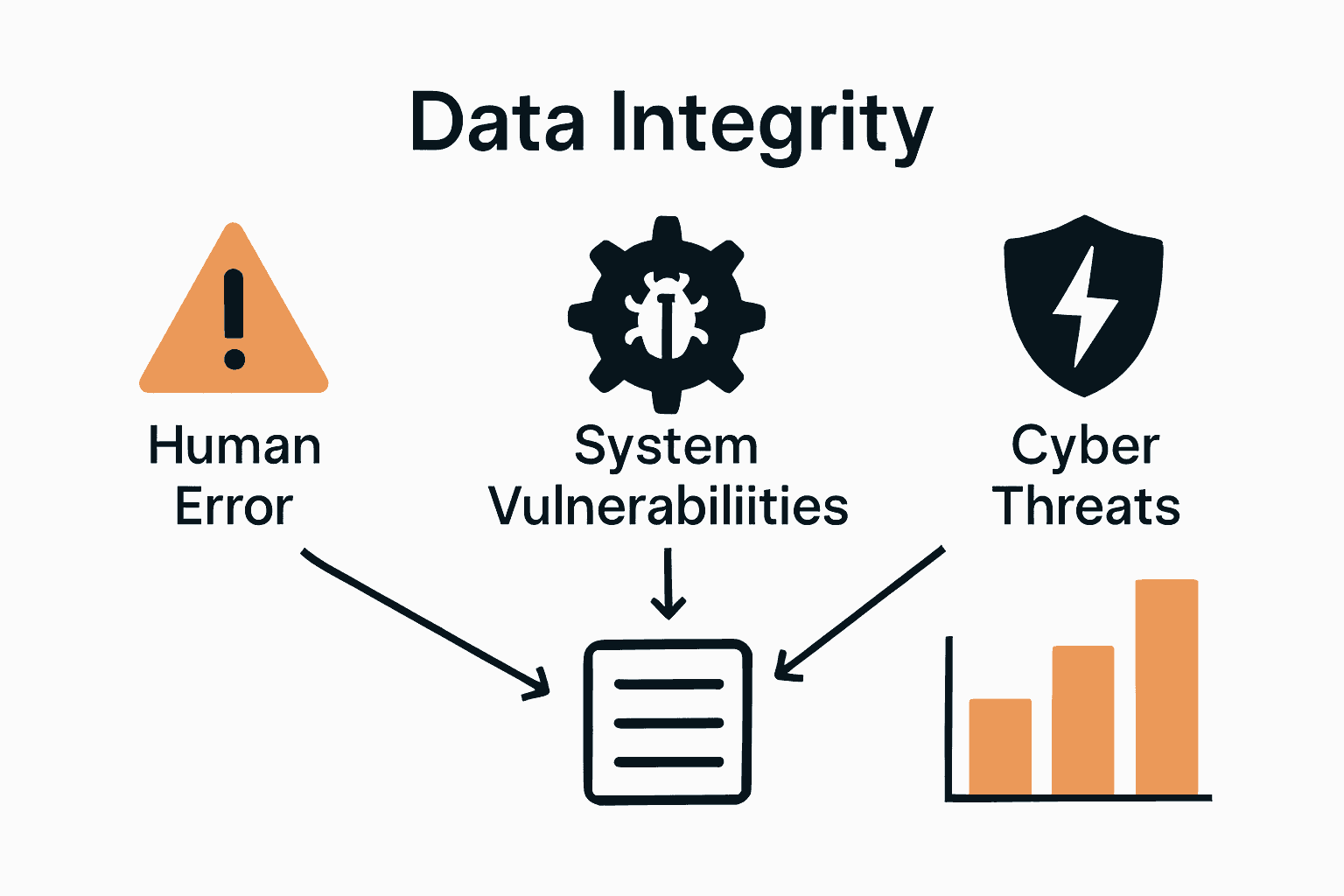
The most significant challenges to data integrity include:
- Human Error: Accidental modifications or incorrect data entry
- System Vulnerabilities: Weak points in software and hardware infrastructure
- Cyber Threats: Malicious attempts to manipulate or destroy data
- Technological Complexity: Increasing system interconnectedness
Data Consistency Challenges
arXiv underscores the profound complexities of managing large datasets, emphasizing that big data introduces unique integrity challenges. Key issues include:
- Inconsistent data formatting
- Privacy and confidentiality risks
- Complex data transformation processes
- Scalability of integrity monitoring systems
Automating Business Processes with Adobe PDF Solutions becomes crucial in addressing these challenges. Intelligent automation can significantly reduce human-induced errors and create more resilient data management frameworks.
Navigating these risks requires a proactive, multi-layered approach. Organizations must invest in continuous training, implement robust technological safeguards, and develop adaptive strategies that can evolve with emerging digital threats. The goal isn’t just protecting data—it’s creating a comprehensive ecosystem of trust and reliability.
Ensuring Data Integrity with Adobe Technologies
Digital document management has transformed dramatically, with Adobe technologies emerging as critical tools for maintaining data integrity across complex enterprise environments. Modern organizations require sophisticated mechanisms to protect, verify, and secure their digital information.
Digital Signature and Authentication
According to Adobe Helpx, digital signatures represent a cornerstone of document authentication and integrity preservation. These sophisticated digital identifiers provide:
- Verifiable document origins
- Tamper-evident protection
- Cryptographic validation mechanisms
- Comprehensive audit trails
Technological Safeguards
Adobe technologies offer multiple layers of protection that go beyond traditional security measures:
- Advanced encryption protocols
- Granular permission management
- Comprehensive tracking systems
- Real-time integrity monitoring
Digital Signature Validation for Enhanced Efficiency highlights how these technologies create robust frameworks for maintaining document trustworthiness. By implementing intelligent authentication mechanisms, organizations can significantly reduce risks associated with data manipulation and unauthorized access.
Ultimately, ensuring data integrity is about creating an ecosystem of trust. Adobe technologies provide the tools, but successful implementation requires strategic planning, continuous monitoring, and a proactive approach to digital document management. The goal is not just protection, but creating a seamless, secure environment where information remains pristine and reliable.
Strengthen Your Data Integrity with Proven Adobe PDF Solutions
Maintaining data integrity means protecting your most valuable information from errors, unauthorized access, and system failures. This article highlights key challenges like human error, complex workflows, and the need for both physical and logical data protection. If you want to ensure your PDF workflows are secure, accurate, and efficient, embracing trusted technologies is essential.

Take control of your digital document environment today by exploring how Mapsoft leverages Adobe® technologies to enhance data integrity and workflow automation. Whether you need to automate PDF processing, implement advanced security like digital signatures, or streamline document management at scale, our specialized solutions — including the powerful Mapsoft PDF Hub — will help you minimize risks and maximize trust in your information.
Don’t leave your data’s reliability to chance. Visit Mapsoft.com now and discover tailored software and services designed to safeguard your digital assets and boost your productivity.
Frequently Asked Questions
What is data integrity and why is it important?
Data integrity refers to the accuracy, consistency, and trustworthiness of data throughout its lifecycle. It is important because it ensures that stakeholders can rely on data for decision-making and that the information remains secure from unauthorized modifications.
What are the types of data integrity?
Data integrity consists of two primary types: physical integrity, which protects data during storage and transmission, and logical integrity, which focuses on ensuring unique identification of records and maintaining consistent relationships between data.
What are common threats to data integrity?
Common threats include human error, system vulnerabilities, cyber threats, and the complexities associated with managing large datasets. Each of these factors can compromise the security and reliability of data.
How can Adobe technologies help maintain data integrity?
Adobe technologies help maintain data integrity through advanced features such as digital signatures, encryption, permission management, and comprehensive tracking systems, which collectively provide a robust framework for securing digital information.